

THE MINDS BEHIND THE MACHINE
We're not just developers – we're gamers, builders, and tech enthusiasts with a passion for perfect performance.
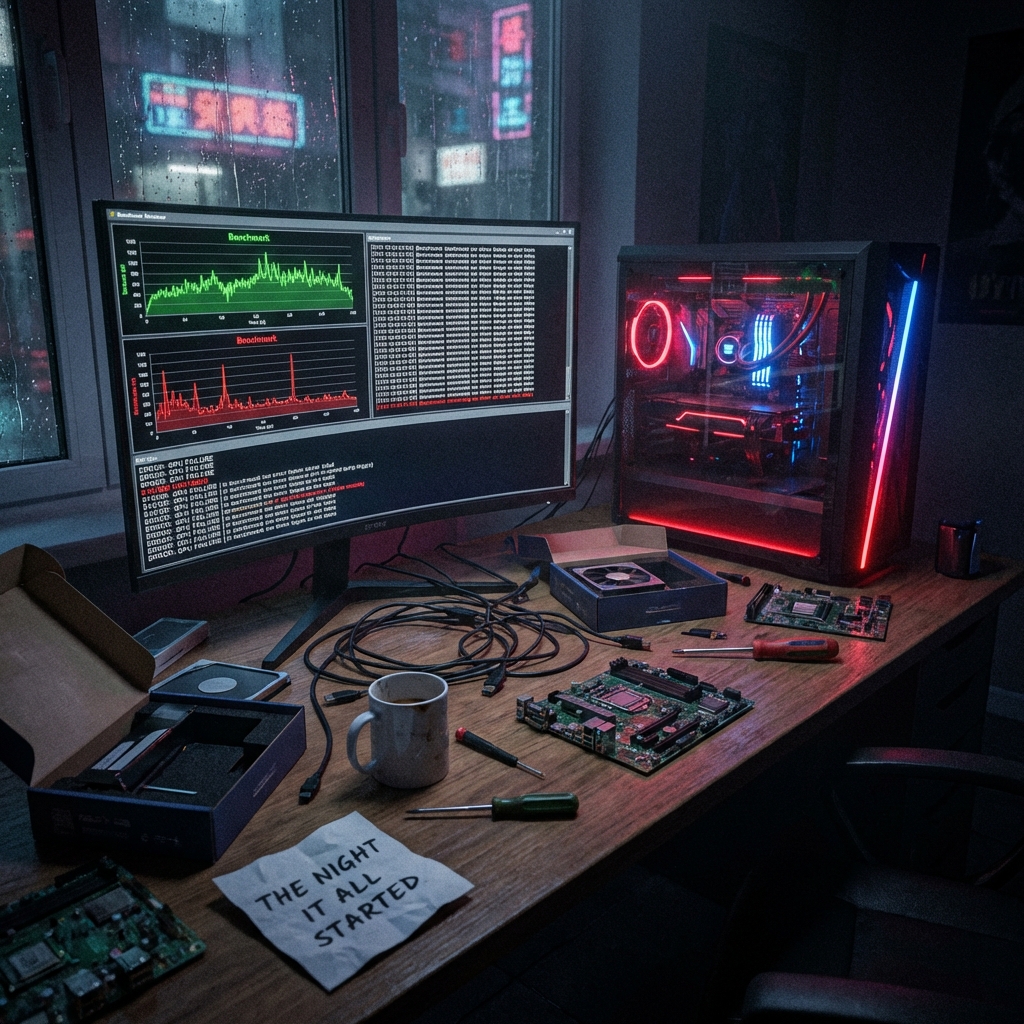
OUR STORY
It all started with a frustrating night of troubleshooting frame drops. After spending weeks researching the perfect components for a high-end gaming rig, something still wasn't right. The culprit? A bottleneck between a powerhouse GPU and an aging CPU.
That night, the idea for the Ultimate Bottleneck Analyzer was born. What if we could build a tool that prevented others from experiencing the same disappointment?
Three passionate PC builders, countless late nights of coding, and hundreds of benchmark tests later – our dream became reality. Today, we help gamers and professionals worldwide achieve the perfect balance in their systems.
OUR MISSION
"We help PC builders compare component balance with transparent estimates, visible assumptions, and practical checks they can verify on their own systems."
HOW THE SITE IS MAINTAINED

CALCULATOR DEVELOPMENT
Calculator changes are reviewed against the documented model inputs, representative component pairs, and expected resolution and workload behavior before publication.
EDITORIAL REVIEW
Editorial review checks that hardware claims are attributed, estimates are labeled clearly, and buying guidance includes the practical limits users should verify.
DATA MAINTENANCE
Component records are normalized to consistent fields and checked for missing specifications before a pairing can enter the curated, indexable result set.
OUR CALCULATION METHODOLOGY
The calculator is a comparison model, not a physical test bench for every possible PC. It combines normalized component scores with resolution, workload, memory, ray tracing, and upscaling adjustments.
Normalized Component Inputs
CPU and GPU records use consistent performance and specification fields so different generations can be compared through the same model.
Scenario Modeling
The model recalculates the pairing at 1080p, 1440p, and 4K and applies different CPU/GPU weights for esports, battle royale, open-world, strategy, and racing workloads.
Reference Review
Public manufacturer specifications and independent benchmark publications provide context for component records and major generation-to-generation changes.
Limits and User Verification
Results explicitly identify their inputs and limitations. Users should compare estimates with in-game utilization, frametime, temperature, and power data from their own PC.
OUR TECH PHILOSOPHY
BALANCE OVER BRUTE FORCE
A balanced build can use its budget more efficiently, but the best pairing still depends on resolution, workload, settings, refresh target, and upgrade path.
PERFORMANCE IS PERSONAL
Your perfect build depends on your unique needs. Gaming, streaming, AI development, or content creation—we tailor our recommendations to your specific use case.
AI-ENHANCED FUTURE
Structured scenario data and explicit methodology make results easier for people and machines to interpret without presenting estimates as measured facts.
WHY TRUST OUR ANALYSIS?
The analysis combines normalized hardware data with a documented scenario model. It is designed for comparison and upgrade planning; users should verify final decisions with measurements from their own system.
REFERENCE SOURCES
JOIN OUR COMMUNITY
Connect with fellow enthusiasts, share your builds, and get personalized optimization advice from our team.